
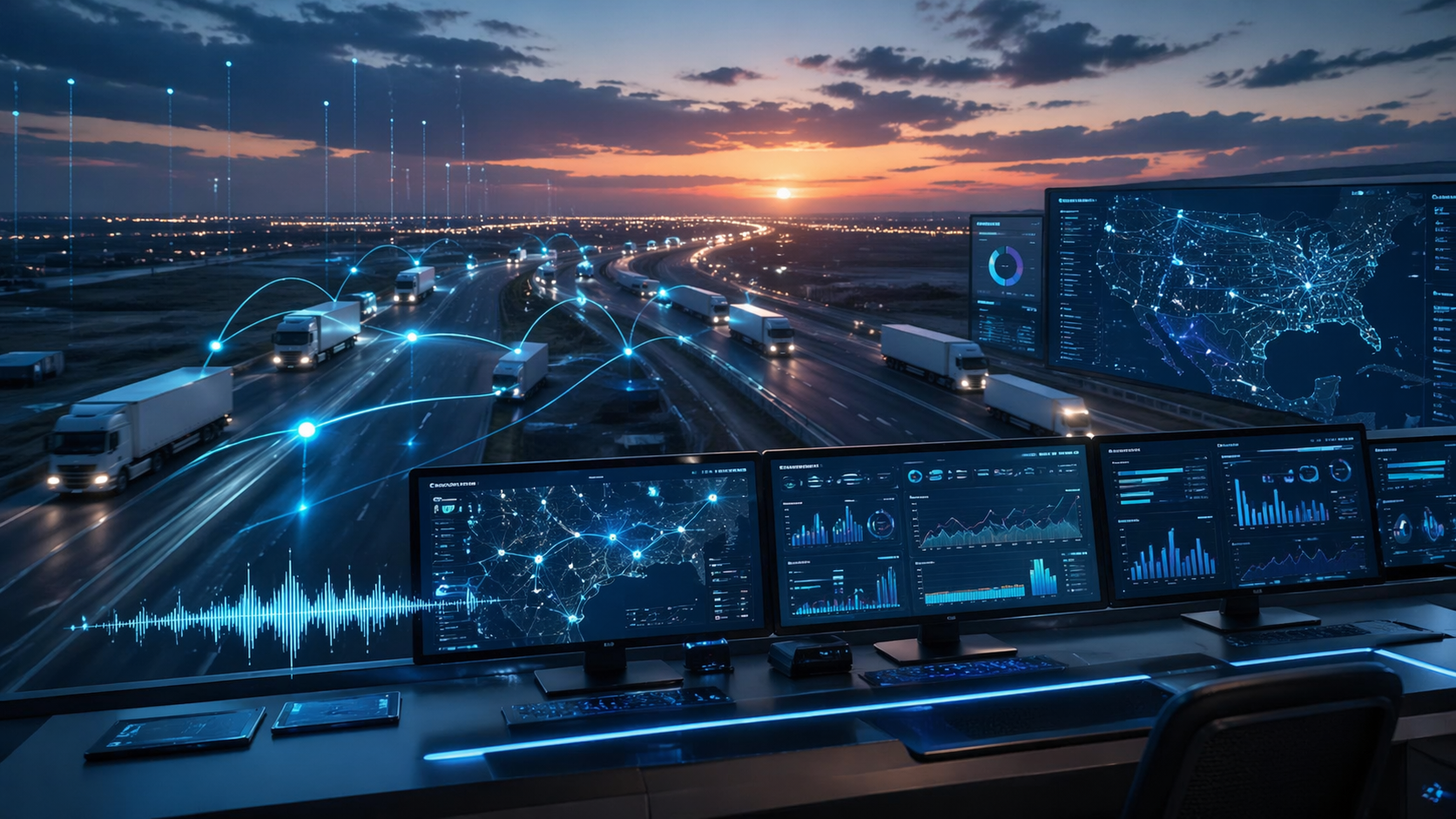
Why manual order entry is slowing down modern fleet operations
Most trucking companies don’t think of order entry as a competitive advantage. It’s seen as admin work. Something that just has to get done.
But here’s the reality: order entry sits at the center of your entire operation. If it’s slow, manual, or error-prone, everything downstream suffers - dispatch, routing, driver communication, customer satisfaction, and ultimately, profitability.
Modern fleets are rethinking this. Not just improving order entry, but eliminating the manual work behind it entirely.
What Is Order Entry Software in Trucking?
Order entry software for trucking companies is the system that captures, processes, and creates loads inside your transportation management system (TMS).
In practice, that includes:
- Load creation for truckload and LTL
- Capturing shipper and consignee details
- Entering pricing, lanes, and appointment times
- Managing order management workflows
- Triggering downstream dispatch management
It sits between your customers (shippers, freight brokers, providers) and your internal operations team.
In most fleets, order entry touches multiple systems:
- Dispatch software
- Fleet management platforms
- Accounting software (like QuickBooks for driver settlements and invoicing)
- ELDs and GPS tracking tools
- Customer portals and EDI feeds
The problem is, it’s rarely centralized.
The Problem with Manual Order Entry
Here’s what order entry actually looks like in most trucking operations:
- Emails from shippers
- Calls from customers and drivers
- PDFs and rate confirmations
- EDI feeds from larger partners
- Notes tracked in spreadsheets
Dispatchers are stuck doing repetitive data entry across systems.
They’re copying and pasting load details into the TMS. Updating status manually. Sending notifications. Logging status updates.
It creates three major problems:
1. Slow Operations
Manual entry delays load creation. That slows down trucking dispatch, routing, and execution.
2. Errors That Impact Service
A missed digit in an address or wrong appointment time creates downstream issues:
- Missed pickups
- Poor customer satisfaction
- Revenue loss
Errors in load details and compliance data can lead to serious operational and regulatory issues, especially under FMCSA requirements.
3. Dispatcher Burnout
Your best people are doing manual work instead of managing exceptions, optimizing routes, and improving service.
This isn’t just inefficient. It’s expensive.
What Modern Order Entry Software Should Do
Order entry software shouldn’t just store information. It should actively streamline operations.
Centralize Incoming Orders
Bring together:
- Phone calls
- EDI
- Customer portal submissions
One place. One workflow.
Automate Data Capture
Modern AI-powered systems extract load details automatically:
- Pickup and delivery
- Rates and lanes
- Customer information
No manual typing. No rekeying.
Integrate with Your TMS
Seamless integrations with platforms like McLeod and other transportation management systems ensure:
- Instant load creation
- No duplicate entry
- Clean, structured data
Enable Real-Time Visibility
Orders shouldn’t sit in queues.
They should move instantly through your system with:
- Real-time tracking
- Real-time visibility
- Immediate status updates
Support End-to-End Workflows
From order intake to dispatch to driver settlements, everything should connect:
- Load management
- Routing and route optimization
- Driver pay and settlement workflows
The Shift from Software to Automation
Most trucking software today is still built as a system of record.
It stores information. It organizes data. But it doesn’t remove work.
The shift happening now is toward automated, cloud-based systems that actually execute workflows.
Instead of:
- Entering orders → then dispatching
It becomes:
- Orders captured → automatically created → instantly dispatched
This is the difference between managing work and eliminating it.
Where Voice AI Fits Into Order Entry
This is where the biggest change is happening.
Order entry doesn’t need to start with a keyboard. It can start with a conversation.
Capturing Orders from Calls
Drivers, shippers, and freight brokers are already calling.
Voice AI turns those conversations into structured data:
- Load details
- ETAs
- Changes and updates
Eliminating Dispatcher Data Entry
No more logging calls. No more manual updates.
Every interaction becomes:
- Automatically captured
- Structured
- Synced to your TMS
Real-Time Updates During Conversations
As the call happens:
- The system updates load status
- Sends notifications
- Syncs across systems
No lag. No follow-up work.
24/7 Order Intake
Your operation doesn’t stop at 5pm.
Voice AI ensures:
- No missed calls
- Continuous order capture
- Faster response times for owner-operators, drivers, and customers
Order entry becomes part of communication - not a separate task.
Benefits of Automating Order Entry for Trucking Companies
When you remove manual work, the impact shows up everywhere.
Faster Dispatch
Loads move from intake to dispatch instantly.
Higher Fleet Utilization
Less delay means better use of trucks, drivers, and assets - regardless of fleet size.
Fewer Errors
Automated data capture reduces costly mistakes.
Lower Operating Costs
Less manual work reduces labor costs and improves profitability.
Industry research continues to show that operational inefficiencies and delays significantly impact fleet profitability.
Better Driver Experience
Drivers don’t sit on hold. They get instant answers via messaging, calls, or a mobile app.
Improved Decision-Making
With clean, real-time data:
- Better routing
- Smarter route planning
- Stronger decision-making
Key Features to Look For in Order Entry Software
Not all software solutions are built the same.
Here’s what actually matters:
- Real-time data capture
- Strong integrations (TMS, ELDs, accounting tools)
- Multi-channel intake (calls, EDI, email)
- AI-powered automation
- Customizable workflows
- User-friendly interface
- Built-in dashboard and analytics
- Support for truckload, LTL, and brokerage
- Compliance support (like IFTA tracking)
- Seamless onboarding for teams
If it doesn’t reduce manual work, it’s not solving the real problem.
How Leading Fleets Are Evolving Order Entry
Top-performing fleets are changing how they operate.
They’re moving from:
- Manual entry → automated workflows
- Reactive ops → real-time operations
- Disconnected tools → all-in-one platforms
Example: Driver Update
A driver calls in with an ETA:
- Voice AI captures it
- Updates the system
- Sends notifications to the customer
No dispatcher involved.
Example: New Load Request
A shipper sends a request:
- Data is extracted automatically
- Load is created in the TMS
- Dispatch is triggered
Minutes instead of hours.
Choosing the Right Order Entry Solution
Most tools will promise efficiency. Few actually deliver it.
Ask these questions:
- Does it eliminate data entry, or just move it around?
- How deep are the integrations with your existing systems?
- Can it handle real-time communication workflows?
- Is it built for the realities of trucking operations?
- Does it scale with your trucking business as you grow?
For smaller fleets and small business operators, ease of use and fast onboarding matter. For larger fleets, scalability and automation matter more.
The Future of Order Entry in Trucking
Order entry is moving toward:
- Fully automated, real-time workflows
- Voice-first operations
- Integrated, cloud-based systems
- AI embedded into daily operations
The goal is simple:
Remove friction across the supply chain.
From shippers to dispatch to drivers, everything should flow without delay.
Final Takeaway: Order Entry Is an Operations Lever
Order entry isn’t just admin work.
It impacts:
- Speed of execution
- Cost structure (including fuel costs and labor)
- Service quality
- Overall profitability
With rising costs across the trucking industry, including fuel and labor, operational efficiency has become a major lever for profitability.
The fleets that win are the ones that:
- Streamline workflows
- Automate repetitive work
- Use real-time data to stay ahead
See How Hyperscale Automates Order Entry in Real Time
Hyperscale is built for modern trucking dispatch and driver operations teams.
Our AI-powered Fleet Operations Platform:
- Captures orders from calls automatically
- Updates your TMS in real time
- Eliminates manual data entry
- Keeps your operation running 24/7
If you’re ready to move beyond manual order entry and truly optimize your operations, it’s time to see what automation actually looks like.
Book a demo and see it in action.
FAQ
Q: What is order entry software for trucking?
Order entry software for trucking captures, processes, and creates loads inside a transportation management system. It can include load creation, shipper and consignee details, pricing, lanes, appointment times, and downstream dispatch workflows.
Q: Why is manual order entry a problem for trucking companies?
Manual order entry slows down dispatch, creates room for errors, and forces dispatchers to spend time copying information across emails, rate confirmations, EDI feeds, calls, spreadsheets, and the TMS. Mistakes in addresses, appointment times, or load details can lead to missed pickups, poor customer satisfaction, and revenue loss.
Q: How does AI automate order entry?
AI can extract pickup and delivery details, rates, lanes, customer information, and appointment times from documents or conversations, then structure that information and sync it into the TMS for review or approval.
Q: Where does Voice AI fit into order entry?
Voice AI can capture order information from calls with drivers, shippers, and brokers, then turn those conversations into structured load details, ETAs, changes, and updates. The article positions order entry as something that can start with a conversation, not just a keyboard.
About Hyperscale Systems
Hyperscale Systems has pioneered a unified AI command center that transforms operational communications across physical industries. Founded by logistics technology veterans with deep expertise from leading companies like Samsara, Hyperscale integrates seamlessly with major TMS, FMS, and telematics providers to deliver contextual agentic workflows that eliminate operational bottlenecks while enhancing human capability.