
Automated Load Entry: Why Carriers Are Moving Beyond Manual Data Entry
Load entry is one of those tasks that looks simple until it becomes the reason the operation is behind. A load arrives by email, a broker portal, a PDF, or a load board. Someone on the team reviews the details, copies the pickup and delivery information, checks pricing, adds notes, attaches docs, and enters the record into the TMS. Repeat that dozens or hundreds of times a day, and it becomes obvious why dispatch teams feel buried.
The problem is not just the time-consuming nature of the task. Manual data entry slows decision-making, creates avoidable errors, and delays the rest of trucking operations. If the load is not entered accurately and quickly, dispatch management suffers, driver communication suffers, and real-time visibility is delayed before the truck even moves.
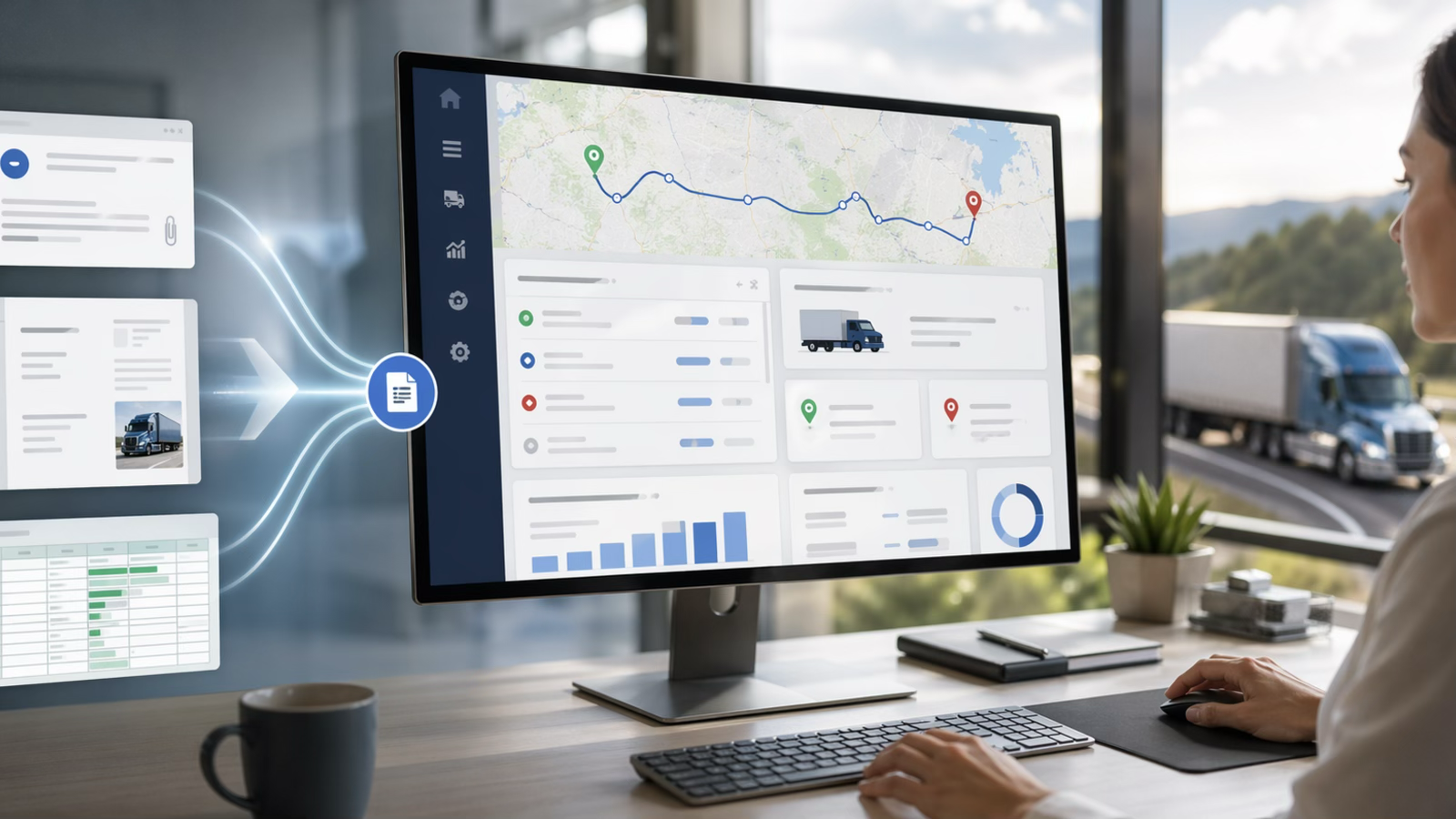
That is why more carriers are looking at automated load entry. The goal is to move from inbox triage to a structured workflow where incoming load details are captured, validated, and pushed into the transportation management system with minimal manual effort.
Why Load Entry Becomes A Bottleneck So Fast
Every trucking business has a version of the same problem. Information arrives in too many formats and at unpredictable times. One shipper sends a clean spreadsheet. Another sends a long email. A broker attaches a rate sheet and BOL. A carrier rep has to scan the docs, decide what matters, and build the record from scratch.
That slows everything down. Dispatchers cannot optimize routing if the load sits in an inbox. Pricing analysis is weaker when records are incomplete. Driver pay and factoring workflows start later than they should. Even basic tasks like onboarding a new customer or attaching supporting docs become messy when the first system record is inconsistent.
Manual load entry also creates a hidden tax on profitability. Teams spend labor hours on repetitive work instead of service, negotiation, and execution. The longer that continues, the harder it becomes to scale without adding headcount.
What Automated Load Entry Should Actually Do
A useful automated load entry workflow should do more than copy fields from one place to another. It should capture the incoming load, extract the structured data, validate it, and place it into the TMS software in a way that supports the next operational step.
That means the system should identify pickup times, delivery appointments, pricing, references, route constraints, and required docs. It should compare the incoming data to known business rules. It should flag missing or conflicting information. And it should move the clean record into the transportation management system fast enough that dispatchers can act on it in real time.
When done well, the workflow becomes a true intake layer for trucking companies. Email, PDFs, spreadsheets, portal exports, and load boards stop being separate administrative headaches and start feeding one consistent process.
Learn more: Order Entry Software for Trucking
The Best Sources To Automate First
Most carriers do not need to automate every source on day one. Start with the channels that create the most volume or the most rework. Email is usually first because so many load details still arrive in messages and attachments. The next good candidates are repetitive shipper formats, recurring broker documents, and structured feeds from providers.
From there, look at additional sources like load boards, BOL attachments, and onboarding packets. If the business is already collecting data in multiple spreadsheets before entering the load, that is another strong sign the workflow is ready for automation.
The point is to pick the use cases where operational efficiency improves quickly. Once those workflows are stable, the team can add more document types and more complex business rules.
Learn more: AI Fleet Operations: How Carriers Are Scaling
How AI-Powered Intake Improves Dispatch Workflows
AI-powered load entry matters because the work is rarely clean enough for a simple parser. The system needs to understand context. It needs to recognize which value is the actual pickup time, which number is the rate, which references should be retained, and which notes belong in dispatch management instead of billing.
That is where an AI-powered intake workflow is more valuable than a basic template matcher. It can interpret messy text, normalize load details, and still route questionable cases for review. It becomes even more useful when it is connected directly to the TMS, dashboard, and related workflow tools.
For example, once the load is structured, the dispatcher can immediately review routing, assign capacity, and trigger driver communication. Real-time visibility starts earlier. Decision-making improves because the operation is working from a clean record sooner. And managers can optimize staffing because fewer people are needed for repetitive data entry.
The Systems That Need To Connect
To make automation useful, the intake layer has to connect to the tools that run the business. That normally includes the TMS, pricing workflows, dispatch tools, and supporting platforms for docs, driver pay, and finance. In some environments, the automation may also need to reference ELD data, route optimization inputs, mobile app activity, or fuel cards.
The TMS remains the main operating record, so the integration needs to be reliable. If load entry is automated but dispatchers still retype information into the TMS, the carrier is only halfway finished. The best result is seamless movement from intake to active load management.
This also supports better dashboard reporting. When the record is created correctly at the start, teams can track pickup performance, on-time service, cash flow timing, and load management quality with more confidence. Bad intake data creates weak reporting later.
Where Humans Should Stay In The Loop
Automation should handle the routine work, not pretend that every load is routine. Human review is still useful for unusual pricing, missing appointment data, unclear documents, and new customer setups. The key is to keep those cases targeted rather than making every record depend on manual intervention.
That balance is especially important in trucking. A dispatcher or operations lead may need to review a high-value load, a sensitive shipper request, or a conflicting document set. But they should not have to do the same copy-and-paste steps on every standard shipment. An automated load entry workflow reduces manual data entry while preserving control where it matters.
Metrics That Matter
To see whether the workflow is working, track a few operational metrics. Look at time from inbound load to TMS creation. Measure manual touches per load. Review data quality, correction rates, and how quickly the team can move from intake to dispatch action. Add related measures such as profitability by lane, load acceptance speed, and on-time execution.
If automation is improving the business, the backlog should shrink, operational efficiency should improve, and dispatchers should spend more time managing loads than entering them. That creates better outcomes across the entire supply chain.
Learn more: Logistics Cost Reduction: How Fleets Cut Costs | Hyperscale
A Practical Rollout For Carriers
Start with one or two workflows that are painful and repetitive. Build the extraction logic, define the required validation rules, and connect the workflow to the TMS. Then test with real users in dispatch and operations. Ask where the record still falls short, which fields matter most, and where manual intervention is still too high.
As the system improves, expand to more document types and more customers. Keep the workflow flexible enough to handle new templates, but disciplined enough that data quality stays high. That is how carriers create a scalable automated load entry process without disrupting daily operations.
The Bottom Line On Automating Load Entry
Automating load entry in trucking is not just about speed. It is about giving dispatchers a cleaner starting point, improving operational efficiency, and creating better real-time visibility from the first moment the load enters the system. When incoming information moves directly from email or docs into the TMS through a structured, AI-powered workflow, the business can streamline execution without sacrificing accuracy.
For carriers trying to grow, that matters. Every minute saved at intake creates more room for better routing, better driver communication, and better decisions across the rest of the operation.
About Hyperscale Systems
Hyperscale Systems has pioneered a unified AI command center that transforms operational communications across physical industries. Founded by logistics technology veterans with deep expertise from leading companies like Samsara, Hyperscale integrates seamlessly with major TMS, FMS, and telematics providers to deliver contextual agentic workflows that eliminate operational bottlenecks while enhancing human capability.